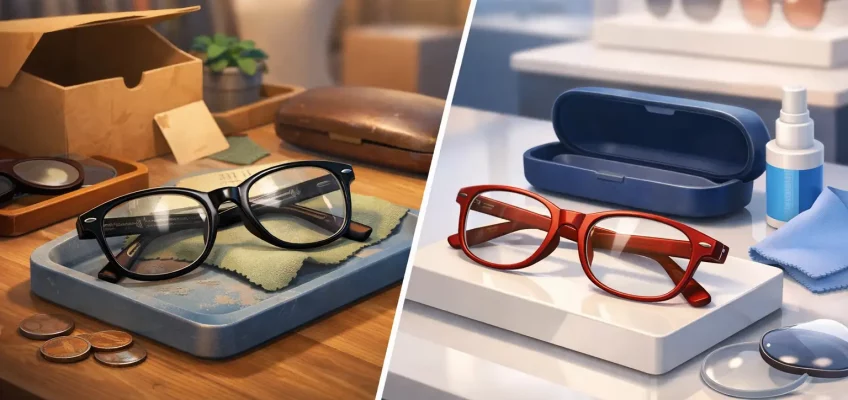
A great pair of glasses can change the way an outfit feels, but the price of a branded frame can make choosing one less enjoyable. When weighing up second hand vs new glasses, the best option is not simply the cheapest one. It is the pair that fits well, suits your style, works with your prescription and feels like good value every time you put it on.
For many shoppers, preloved frames offer a more interesting route to designer eyewear. You may find a distinctive colour, a discontinued shape or a recognised brand at a price that leaves more room in the budget for lenses. New glasses still have their place, particularly when you want a current release or a specific feature. The key is knowing what you are paying for and what to check before you buy.
Second hand vs new glasses: the real difference
The main difference is not whether the frames can look good. A carefully chosen preloved pair can look every bit as polished as a new one. The difference lies in availability, condition, price and the buying experience.
New frames are generally sold in a full range of current colours and sizes. If you have tried a particular model in an optician and know the exact version you want, buying new can be straightforward. They are unused, often supplied with original packaging, and may come with a manufacturer warranty depending on the retailer.
Second-hand glasses are individual pieces. Once a frame has sold, another identical pair may not appear again. That is part of their appeal for people who prefer something less predictable than the latest high-street collection. It also means you should read the listing carefully, paying close attention to measurements, photographs and the stated condition.
A good resale retailer makes that process much easier. At Maryten, frames are selected, inspected, cleaned and graded so customers can shop with a clearer picture of what they are buying. Preloved does not have to mean taking a chance on a frame with hidden wear.
Price: where preloved frames often win
Designer glasses can be made with quality acetate, metal components and detailed finishes, but new retail prices can rise quickly. Buying second hand can make labels such as Marc Jacobs, Hugo Boss or Dolce & Gabbana more accessible without choosing a lower-quality look simply to stay within budget.
The saving varies by brand, condition and rarity. A classic black frame from a popular designer may be priced well below its original retail cost, while a hard-to-find vintage style may command more. Even then, the value can be strong if the frame is well made, distinctive and likely to stay in your wardrobe for years.
It is worth separating the cost of the frame from the cost of prescription lenses. In both cases, most buyers will need new lenses fitted to their current prescription. A lower-priced preloved frame can therefore be particularly useful if you have a more complex prescription, thinning requirements or lens coatings that increase the final cost.
New frames may be the better choice if a retailer is offering a genuine promotion on the exact pair you want, or if you need a very specific size that is difficult to find second hand. Smart shopping is not about insisting that one route always wins. It is about comparing the complete cost, rather than the ticket price alone.
Style: current trends or a frame with character?
New eyewear collections are designed around the moment. You will see the season’s shapes, colours and logos, from clean rectangular frames to oversized statement looks. That can be ideal if you want a particular trend or want your glasses to match a new wardrobe direction.
Preloved and vintage frames offer something different: choice beyond the current season. A slightly softer cat-eye, a narrow 1990s rectangle, a bold patterned acetate or an understated metal frame may be easier to find when you look beyond new stock. These are the pairs that can make everyday glasses feel personal rather than purely practical.
Branded eyewear also tends to have details worth looking for. Consider the hinge design, the quality of the acetate, the shape of the temples and the way the frame sits around your eyebrows and cheekbones. A recognisable logo may matter to some shoppers, but the best frame is one that flatters you without trying too hard.
If you already own several pairs, second-hand shopping can be a sensible way to experiment. A bolder colour or vintage silhouette may not be the frame you wear for every workday, but it can be a brilliant option for weekends, holidays and occasions when you want a different look.
Condition: what should you check?
Condition is the question that matters most when buying second-hand glasses online. Honest grading and clear images are essential, because minor cosmetic wear can be perfectly acceptable to one shopper and a reason to choose another pair for someone else.
Look closely at the front of the frame, the bridge, the temples and the hinges. Small surface marks may be visible on preloved frames, especially on glossy acetate or metal finishes. More significant issues to avoid include cracks, bent temples, damaged hinges and areas where the frame no longer sits evenly.
The measurements are just as useful as the photographs. Most frames show three numbers inside one temple, such as 52-17-140. These usually refer to lens width, bridge width and temple length in millimetres. Comparing them with a pair you already wear comfortably is one of the simplest ways to narrow down your choices.
A frame can also be adjusted by an optician after new lenses are fitted. Nose pads can often be replaced or adjusted, and temples may be shaped for a more secure fit. However, adjustment cannot turn a frame that is much too narrow into one that suits a wider face. Start with the closest measurements you can find.
Hygiene and prescription lenses
The frame is the reusable part of a pair of glasses. The lenses should usually be replaced, particularly if they contain someone else’s prescription, have scratches or are not suitable for your visual needs. This is normal, and it gives you the chance to choose lenses that match how you use your glasses.
For example, you may want anti-reflective coating for screen work, photochromic lenses for changing light or thinner lenses for a stronger prescription. Take your chosen frame and up-to-date prescription to a qualified optician or lens provider, who can confirm whether the frame is suitable for your lenses.
Cleaning and inspection matter too. A trusted seller should present frames in a clean, wearable condition and be open about any signs of prior use. That reassurance is especially valuable with branded eyewear, where shoppers want the savings of resale without compromising on confidence.
The sustainability case for second-hand frames
A pair of glasses is a small item, but it uses materials, manufacturing energy, packaging and transport. Extending the life of a good-quality frame makes practical sense. Instead of leaving a perfectly wearable designer frame unused, resale gives it a new purpose with new prescription lenses.
Choosing second hand does not mean giving up quality or style. In many cases, it means choosing a frame that has already proved its durability. Well-made acetate and metal frames can last for years when cared for properly, and a timeless shape is less likely to feel dated after one season.
That said, buying new can still be a considered choice. If a new frame fits you exceptionally well and you expect to wear it daily for a long time, it is not a throwaway purchase. The more useful question is whether you are choosing deliberately, rather than replacing glasses just because a new collection has arrived.
Which option is right for you?
Second-hand glasses are likely to suit you if you value branded design, want to spend less than the original retail price, enjoy finding less common styles or want a more sustainable option. They are especially appealing when you are happy to compare measurements and condition details before making a decision.
New glasses may be preferable if you need a precise model, colour or size from a current range, want an untouched frame with a manufacturer warranty, or simply have found a pair that fits perfectly and meets your budget. There is no wrong answer when the frame is comfortable, suitable for your prescription and one you genuinely want to wear.
The most satisfying purchase is often the pair that feels considered rather than automatic. Whether you choose a fresh release or a carefully graded designer find, take the time to check the fit, condition and lens options. A good frame should earn its place in your daily routine, not just on the shelf.
Looking for a frame? browse our preloved designer glasses frames – every frame is cleaned, inspected and sent with free tracked UK delivery.
