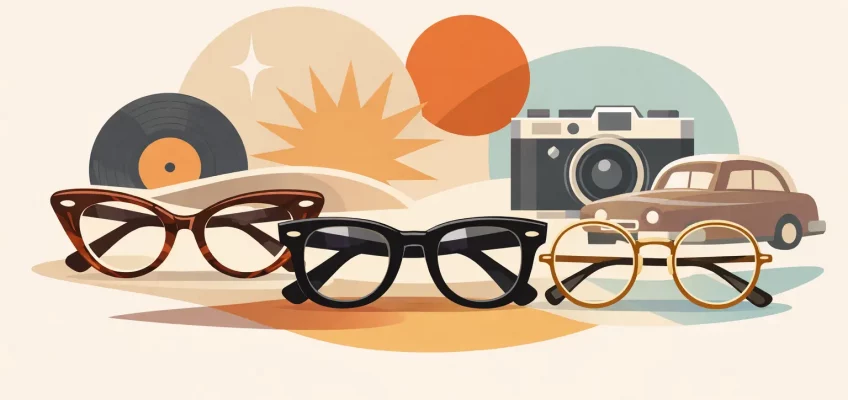
A great pair of older frames can do more than correct your vision. It can make a simple knit, white shirt or work outfit feel considered without trying too hard. The best vintage glasses styles have stayed desirable because they bring shape, character and quality that can be difficult to find on the high street – often at a far friendlier price when bought preloved.
Vintage does not have to mean costume-like. The right frame should feel like it belongs to you now, whether you prefer understated tortoiseshell, a bold designer logo or an unmistakable 1970s silhouette. The key is choosing a shape that suits your features, your prescription needs and how you actually dress day to day.
Best vintage glasses styles to look for
Cat-eye frames
Cat-eye glasses are one of the most recognisable vintage styles, with an outer edge that lifts gently upwards. They became a signature look in the 1950s and 1960s, but they remain remarkably wearable. A subtle cat-eye in black, brown or translucent acetate feels polished for everyday use; a sharper, more exaggerated upsweep makes more of a statement.
This shape can be particularly flattering if you want to add lift around the eyes or soften a rounder face. It is also a sensible option for shoppers who like feminine styling without wanting something overly delicate. Look for frames with a comfortable bridge and enough lens depth for your prescription, as some original-inspired cat-eyes can run quite shallow.
Browline and Clubmaster-style frames
Browline frames place visual weight across the top of the glasses, usually with a bold acetate brow and slimmer metal rims below. They have a smart, mid-century feel and work well when you want a frame that looks intentional but not flashy.
Their balance is what makes them so versatile. Dark tortoiseshell or black browlines can suit office wear, while gold-tone metal details add a warmer, more traditional finish. If your eyebrows are naturally strong, choose a lighter or narrower brow section so the frame does not compete with them. For a softer look, try brown, honey or clear acetate rather than solid black.
Round metal glasses
Round glasses have been worn in many eras, from the small wire frames of the 1920s to the larger, relaxed styles popular in the 1970s. That history gives them real range. Fine gold or silver metal round frames can look neat and intellectual, while larger round lenses in warm bronze or antique tones feel more expressive.
They are a favourite for people with angular or square face shapes because the curve can soften strong lines. The trade-off is that very small round lenses may not offer enough room for higher prescriptions or progressive lenses. Check lens measurements before falling for the look, especially when shopping second-hand online.
Oversized 1970s frames
Few styles say vintage quite as clearly as oversized 1970s glasses. Think wide lenses, substantial acetate and earthy shades such as amber, caramel, olive and rich tortoiseshell. These frames can be glamorous, playful or quietly sophisticated depending on the colour and thickness.
The best approach is to let an oversized frame be the focal point. A classic wardrobe of denim, neutral tailoring and simple jewellery gives it room to shine. Larger frames can also provide useful lens coverage, although they need to sit securely on the nose and ears. If the frame is too wide, it may slide down or make your eyes appear too close together.
Aviator-inspired optical frames
Aviators are not only for sunglasses. Optical versions retain the recognisable double bridge and teardrop or softly squared lens shape, often in lightweight metal. They offer a confident vintage reference without looking as though you are dressing for a theme party.
Aviator frames tend to suit oval and heart-shaped faces particularly well, but the fit matters more than any rule. The top bar should sit comfortably rather than pressing against your brow, and the lenses should not rest on your cheeks when you smile. For everyday wear, a slimmer metal aviator is often easier to style than an oversized, highly curved version.
Square acetate frames
Square and slightly rectangular acetate frames appeared across several decades, which is why they are among the easiest vintage finds to wear now. A thick black frame gives a sharp, graphic look. Softer corners, translucent brown acetate or a gentle tortoiseshell pattern make the same basic shape more relaxed.
This is a strong choice if you want a dependable everyday frame with vintage character. It can add definition to round or oval faces, and it works neatly with both casual and smarter clothing. Be mindful of scale: a very narrow rectangle can feel dated in the wrong way, while a medium-width square frame generally has more staying power.
How to choose vintage frames that suit you
Face-shape advice is useful, but it should never overrule comfort. Your glasses should sit evenly, keep your pupils roughly centred in the lenses and leave enough space between the bottom of the frame and your cheeks. A well-fitted frame will always look more convincing than a supposedly perfect style that pinches or slips.
Start with the shapes you already wear confidently. If you usually choose a simple square frame, try a vintage version in a richer acetate or with more rounded edges. If you normally favour delicate metal glasses, experiment with a slightly larger round or aviator silhouette. Small changes often feel more wearable than jumping straight to the most dramatic decade-inspired look.
Colour deserves just as much attention as shape. Black frames are timeless, but brown and tortoiseshell can be gentler against fair skin and warmer hair colours. Clear acetate gives a lighter, modern feel, while burgundy, forest green and deep navy offer colour without becoming difficult to wear. Gold-tone metal usually brings warmth; silver and gunmetal tend to look cleaner and cooler.
What to check when buying preloved vintage glasses
Buying second-hand branded frames is a smart way to find distinctive eyewear without paying new-season prices. It also keeps well-made frames in use for longer, which is a practical choice for anyone trying to make their wardrobe a little more sustainable. However, condition is part of the value, so look beyond the headline style.
Pay close attention to frame measurements. The lens width, bridge width and temple length help you compare a pair with glasses you already own. Photos should show the front, sides and inside arms, where size details and branding are usually found. If you need prescription lenses, check that the frame has suitable lens depth and that your optician can reglaze it for your requirements.
With vintage and preloved frames, minor signs of age can be part of their character. What matters is whether the hinges are sound, the arms are aligned and the acetate is in good order. A carefully inspected, cleaned and clearly graded pair gives you a much better basis for choosing with confidence. At Maryten, that attention to condition helps make preloved designer eyewear feel like a sensible purchase rather than a gamble.
Styling vintage glasses without overdoing it
The easiest way to wear vintage frames is to pair them with clothes from your own wardrobe, not a full period outfit. Cat-eye glasses look fresh with a trench coat and trainers. Round metal frames suit a crew-neck jumper and tailored trousers. Oversized 1970s acetate can add personality to a plain T-shirt, jeans and a structured coat.
If your frames are bold, keep the rest of the look relatively clean. If your frames are fine and understated, you have more freedom with print, colour and accessories. There is no need to match every detail. The contrast between an older frame shape and modern clothing is often what makes the style work.
A good vintage frame should earn its place in your everyday rotation, not sit in a case waiting for the right occasion. Choose the pair that fits well, feels like your style and makes getting dressed that little bit more enjoyable.
Looking for a frame? browse our vintage designer glasses frames – each one cleaned, inspected and sent with free tracked UK delivery.
